SPIGOLO
Glass Half Full: Food, Service, Detail-orientation
Glass Half Empty: Wine List
What a great meal we had last night at Spigolo, the decidedly too-crowded UES (Upper East Side for non-NYC folk) Italian boite. The young, beautiful owners, Heather and Scott, with the old-fashioned New York Italian name (Fratangelo) and staff were warm, charming, welcoming, attentive, and fully concerned with making the diners' experience excellent. What can be said about the food? The salmon tartare with a little lemon compote and cucumber relish was delicate and lively, the grilled baby octopus tender and deliciously smoky, the duck-liver and english pea risotto... Help! What a stunner! We paired that with a little Moscato d'Asti, a fantastic combination, but we could have eaten it with a glass of filthy water from the Gowanus Canal, and it still would have been one of the most sublime dishes you could ever hope to have! What a treat indeed! I could go on in general about the food at Spigolo, but its reputation for food is quite well-known. Quite simply, it is excellent to the point of being flawless in its category, refined-yet-somehow-down-home fare. Go there! Drool! Eat!
I hate to have a nit to pick at Spigolo, because I was so impressed with the food and the effort put forth by all concerned, but if there is a nit to pick, it's the fact that the wine-list needs attention.
Big surprise, right? I train sommeliers and put together restaurant wine lists, among other things. Could I be looking for a gig? I'll confess: sure. My job is to make your wine/life experience better, so if I see a need...
There were some interesting wine selections, and of course we had quite a few of them, including Schiopetto's Pinot Bianco and the lovely "il Repertorio" Aglianico, but overall, the list needs better structure and balance, and a focus on more independent artisan vintners. There were a few too many big-production wines, and it seemed as if the selection might sometimes be left up to the discretion of the distributors who supply Spigolo, as opposed to the owners or the restaurant's Sommelier... Wait! As far as I could tell, there was no official sommelier. At least one was not introduced as such. Too bad. That is needed there. In lieu of hiring a full-time in-house sommelier however, they at least should get someone in to rework the list, train the staff on the wines, and promote a wine and food-pairing notion in general. It is not the first time, nor will it be the last, that I have been to a restaurant where I have the impression that the restaurateurs themselves are so focused on the food that they have no time to deal with the wine. Why should they? Their focus and passion is the food. On the other hand, why not have a sommelier or an outside consultant come in from time to time? I'll tell you why...
Until they quadruple the space, make people eat their meal in three minutes flat, or shrink people to the size of ants, there is no need to have another reason for people to go to Spigolo. The food is too good, and I am sure that they are booked all the time, so for the owners, the need to spend time and money improving the wine component of the restaurant may seem superfluous. I understand that. I really do. At the same time, there are so many great restaurants in New York that do manage to have great food, great service, and a great wine experience at the table, that the legacy of Spigolo could be threatened a bit. In fifty years (or whenever) when Spigolo is no longer, will its memory stand out in the sea of the New York restaurants that once were, or will it simply be forgotten because there will be yet another great restaurant that will have taken its place in The City? I would suggest that they will have a better chance of both operating for a longer period of time, and have a better chance of being remembered after they are gone if they do hire me! Just kidding!
...or am I?
At any rate, raise a glass to Spigolo.! Thank you so much for last night Heather and Scott. I'll be back (if you let me after you read this).
Love and Wine to all!
The Vinucator
Friday, June 6, 2008


Thursday, June 5, 2008
Look For The Restaurant Review Of Spigolo
Look here for The Vinucator's review of "Spigolo" (81st St. and 2nd Ave., Manhattan) and its wine list, which will be up by tomorrow.
Buon Appetito!
The Vinucator
Buon Appetito!
The Vinucator
Homogenization Isn't Just for Milk Anymore
Let's talk today about the homogenization of wine, using the 2005 vintage from Bordeaux as an example.
I and hundreds of other wine tradespeople are invited every year to a tasting organized by many of the producers in Bordeaux who happen to own Grand Cru vineyards. The Grand Cru designation itself in Bordeaux is based on a false premise, but that is a subject for another blog post. I guarantee I'll get to it another day.
The name of the group is The "Union des Grands Crus de Bordeaux", and their most noble and right-minded objective is to do the best they can to promote wines from the region, thereby assuring the Bordelais, particularly those in the Union, a good living. There is nothing wrong with this in the least, and we should all wish them well.
There is one thing, though, about which we should all be aware: the price of Bordeaux rarely goes down or remains the same, even though the quality (like the quality of ALL wines) fluctuates from year to year. The funniest part about the 2005 vintage though, is that by all accounts, it is one of the "best vintages ever in Bordeaux". What does this mean? Well, what it seems to mean to Robert Parker and others is that the wine is rich, forward, "big-shouldered", delicious young, has all of its elements (acid, tannin, fruit, etc...) in balance, and will age well. Sounds great, doesn't it?! Sure it does!
There's a problem though: With few exceptions, all the wines from the 2005 vintage in Bordeaux taste the same, be they from St. Julien, St. Estephe, St. Emilion, or Margaux. Normally, each of these regions has a particular taste profile that even a mildly-experienced taster is able to distinguish. In other words, for example, the comparatively feminine Margaux should taste different from the comparatively masculine St. Julien. Not in 2005. In part, this can be attributed to what we know about changes in wine-making, and, particularly prevalent in Bordeaux, the so-called Parkerization of wine, and the influence of consulting oenologist Michel Rolland. Part of the fact that the 2005 Bordeaux taste the same though, is NOT their fault, no matter how much some people would like to blame them. It was the "fault" of the good weather and the consequent ease with which producers were able to make a wine that has all of the aforementioned qualities, even if it meant abandoning the nature of the "terroir". These producers, though, could have maintained the character of their "Place" (note the capital "P"), by NOT using the techniques advocated by Rolland and others. The combination of that AND the weather was just too much. I, for one, would like to have a choice in wine, and do not always want to drink a big, rich, "hedonistic" wine. Different wines are needed for different foods and different moods, and a disservice is done to the wine consumer by trying to follow what the vintners think the market is after, rather than stick to their traditions, and, first and foremost, make the wine they like and which has been the expression of their land for generations. In this way, the French Revolution and the democratization of wine was a bad thing. At least the aristocracy and the Church did not need to appeal to the masses, and only made wine for their own enjoyment, consequently focusing all of their attention on producing the best GRAPES possible, and letting the land speak through the wine. One of the good things about the French Revolution, on the other hand, is that now one can look all over the place for good wine. That is what we should do.
What will ultimately happen for Bordeaux, of course, is that people will look elsewhere for variety when they want a Bordeaux-esque wine, but don't want to pay the price. The Languedoc and certain areas of Spain and Italy come to mind immediately. Also, people will get smart and buy other vintages of Bordeaux which better represent the specific character of each sub-region, and at a more palatable price.
That, at least, is what The Vinucator recommends.
Love and Wine.
Salud!
The Vinucator
I and hundreds of other wine tradespeople are invited every year to a tasting organized by many of the producers in Bordeaux who happen to own Grand Cru vineyards. The Grand Cru designation itself in Bordeaux is based on a false premise, but that is a subject for another blog post. I guarantee I'll get to it another day.
The name of the group is The "Union des Grands Crus de Bordeaux", and their most noble and right-minded objective is to do the best they can to promote wines from the region, thereby assuring the Bordelais, particularly those in the Union, a good living. There is nothing wrong with this in the least, and we should all wish them well.
There is one thing, though, about which we should all be aware: the price of Bordeaux rarely goes down or remains the same, even though the quality (like the quality of ALL wines) fluctuates from year to year. The funniest part about the 2005 vintage though, is that by all accounts, it is one of the "best vintages ever in Bordeaux". What does this mean? Well, what it seems to mean to Robert Parker and others is that the wine is rich, forward, "big-shouldered", delicious young, has all of its elements (acid, tannin, fruit, etc...) in balance, and will age well. Sounds great, doesn't it?! Sure it does!
There's a problem though: With few exceptions, all the wines from the 2005 vintage in Bordeaux taste the same, be they from St. Julien, St. Estephe, St. Emilion, or Margaux. Normally, each of these regions has a particular taste profile that even a mildly-experienced taster is able to distinguish. In other words, for example, the comparatively feminine Margaux should taste different from the comparatively masculine St. Julien. Not in 2005. In part, this can be attributed to what we know about changes in wine-making, and, particularly prevalent in Bordeaux, the so-called Parkerization of wine, and the influence of consulting oenologist Michel Rolland. Part of the fact that the 2005 Bordeaux taste the same though, is NOT their fault, no matter how much some people would like to blame them. It was the "fault" of the good weather and the consequent ease with which producers were able to make a wine that has all of the aforementioned qualities, even if it meant abandoning the nature of the "terroir". These producers, though, could have maintained the character of their "Place" (note the capital "P"), by NOT using the techniques advocated by Rolland and others. The combination of that AND the weather was just too much. I, for one, would like to have a choice in wine, and do not always want to drink a big, rich, "hedonistic" wine. Different wines are needed for different foods and different moods, and a disservice is done to the wine consumer by trying to follow what the vintners think the market is after, rather than stick to their traditions, and, first and foremost, make the wine they like and which has been the expression of their land for generations. In this way, the French Revolution and the democratization of wine was a bad thing. At least the aristocracy and the Church did not need to appeal to the masses, and only made wine for their own enjoyment, consequently focusing all of their attention on producing the best GRAPES possible, and letting the land speak through the wine. One of the good things about the French Revolution, on the other hand, is that now one can look all over the place for good wine. That is what we should do.
What will ultimately happen for Bordeaux, of course, is that people will look elsewhere for variety when they want a Bordeaux-esque wine, but don't want to pay the price. The Languedoc and certain areas of Spain and Italy come to mind immediately. Also, people will get smart and buy other vintages of Bordeaux which better represent the specific character of each sub-region, and at a more palatable price.
That, at least, is what The Vinucator recommends.
Love and Wine.
Salud!
The Vinucator
Wednesday, June 4, 2008
In The Beginning
Here it finally is: the Blog you have all been pestering me to create! I hope that you will enjoy it, and that we create legions of fans!
We will be talking about everything that we do in the classes: wine geology, geography, viticulture, grape varietals, and everything else you can think of concerning wine. You will all be able to share my thoughts on other wine writers like Robert Parker, Steven Tanzer, and all of the other VinsinuatorsTM out there! In addition, I will tell you where I'm going, what I'm tasting, and whether or not it will be worth it for you to do so as well. As the construction of the VINUCATIONTM website proceeds, you will have a lot more to look at, learn, and enjoy!
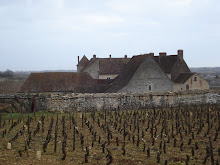
I will give you a rundown of my recent trip to Burgundy, the upcoming Brazilian wine-tasting, and the German wine dinner. I will rail against journalistic palaver ("it smells like raspberries, cherries, and a hint of hogwash"), and other mis-informed scribble. I look forward to sharing with you, and to have you share your insights with me.
Get Vinucated!
Yours in Wine,
The Vinucator
We will be talking about everything that we do in the classes: wine geology, geography, viticulture, grape varietals, and everything else you can think of concerning wine. You will all be able to share my thoughts on other wine writers like Robert Parker, Steven Tanzer, and all of the other VinsinuatorsTM out there! In addition, I will tell you where I'm going, what I'm tasting, and whether or not it will be worth it for you to do so as well. As the construction of the VINUCATIONTM website proceeds, you will have a lot more to look at, learn, and enjoy!
I will give you a rundown of my recent trip to Burgundy, the upcoming Brazilian wine-tasting, and the German wine dinner. I will rail against journalistic palaver ("it smells like raspberries, cherries, and a hint of hogwash"), and other mis-informed scribble. I look forward to sharing with you, and to have you share your insights with me.
Get Vinucated!
Yours in Wine,
The Vinucator
Subscribe to:
Posts (Atom)